
Improving Your Website’s First Impression
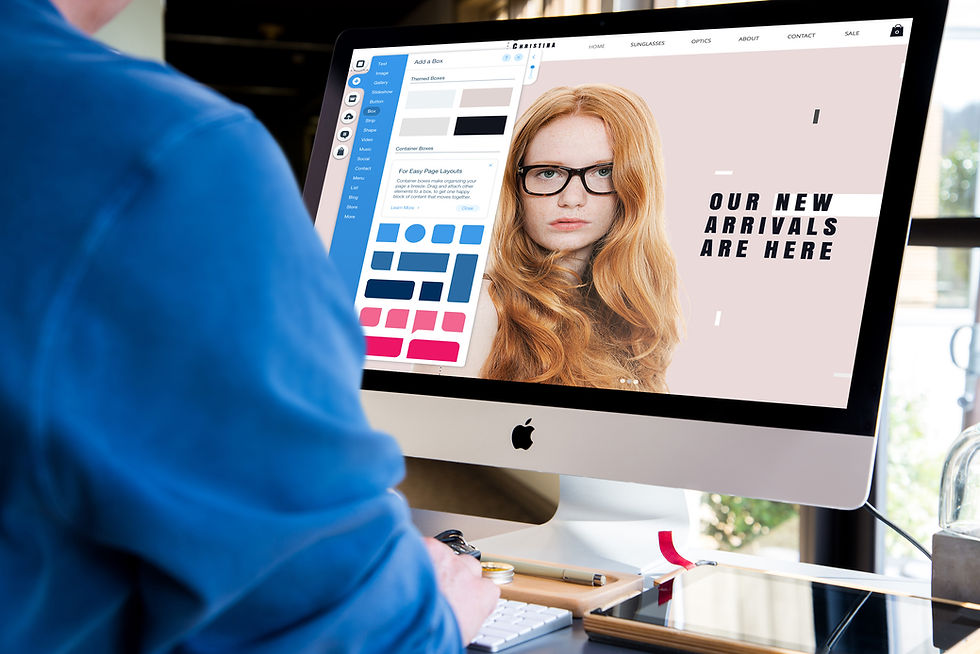
I’m going to date myself here and I’m ok with that. When I first started building websites, I used html and php code. I spent countless hours at my desk at the Utah Department of Health building websites from a blank white screen. It was fabulous and frustrating.
Now let’s fast forward to today where websites are being built and rebuilt every second. How do you get your website to stand out from the millions out there? It is not about the beautifully branded site, it’s about how quickly a user understands what they’re looking at—and whether it felt like it was for them.
There’s a moment that happens within the first few seconds of landing on a website. It’s quiet, almost subconscious.
User question:
Do I understand this?
Is this for me?
Do I trust this?
If the answer isn’t clear, people leave. Over the years I’ve learned that your website is about more about the users and less about you.
Provide Clarity to Your Website, Not Confusion
I’ve fallen into this trap, I’ve treated my website like a place to show everything I had done. Every service. Every idea. Every offering. But the more I added, the less clear it became.
It wasn’t until I shifted my mindset that things changed:
Your website isn’t there to impress people—it’s there to guide them.
When someone lands on your homepage, they’re looking for a solution to a problem. Your website should offer a clear and understandable solution. If someone lands on your site and has to figure out what you have to offer them, you’ve already lost them.
Within the first few seconds, your site should clearly answer:
Who you help
What you help them do
What they should do next
That’s it.
One of the biggest mistakes I see is businesses making their audience work too hard. Their website includes long paragraphs, vague language and too many options. When someone has to think too much, they leave.
Instead:
Keep your messaging simple
Break up your content
Guide people step by step
Think of your website like a conversation—you wouldn’t overwhelm someone in person, so don’t do it online. You don’t need clever wording. You don’t need to sound overly polished. You just need to be clear. A website doesn’t need to be overly complex or trendy to be effective. What matters is how it feels to move through it.
Does it feel:
easy to navigate?
calm or overwhelming?
intentional or scattered?
People don’t stay because something is “cool.” They stay because something feels right.
Small Changes Make a Big Difference
You don’t need to rebuild your entire website to improve it. Start with small changes like; rewriting your homepage headline for clarity, simplifying your navigation, removing anything that feels unnecessary. These changes often have a bigger impact than a full redesign.
Don’t forget our call to action. If someone is ready to take the next step, it should be clear what that step is. Whether it’s booking a call, signing up for an event or exploring your services.
One of the simplest ways to improve your website is to ask:
“If someone is ready, do they know exactly what to do next?”
A Few Questions to Ask Yourself
If you want to improve your website’s first impression, ask:
Would someone understand what I do in 5 seconds?
Does my site feel clear or cluttered?
Is it obvious who this is for?
Is the next step easy to find?
If the answer to any of these is no, that’s where to start.
One Last Thing
Your website doesn’t need to be perfect. It just needs to be clear, welcoming, and aligned with what you’re building. Because at the end of the day, your website is often the first place people meet you. And first impressions matter—but they don’t have to be complicated.
Always Remember,
You’re not alone in this.
Katie


Comments